
Best Boards for LEDs in 2026
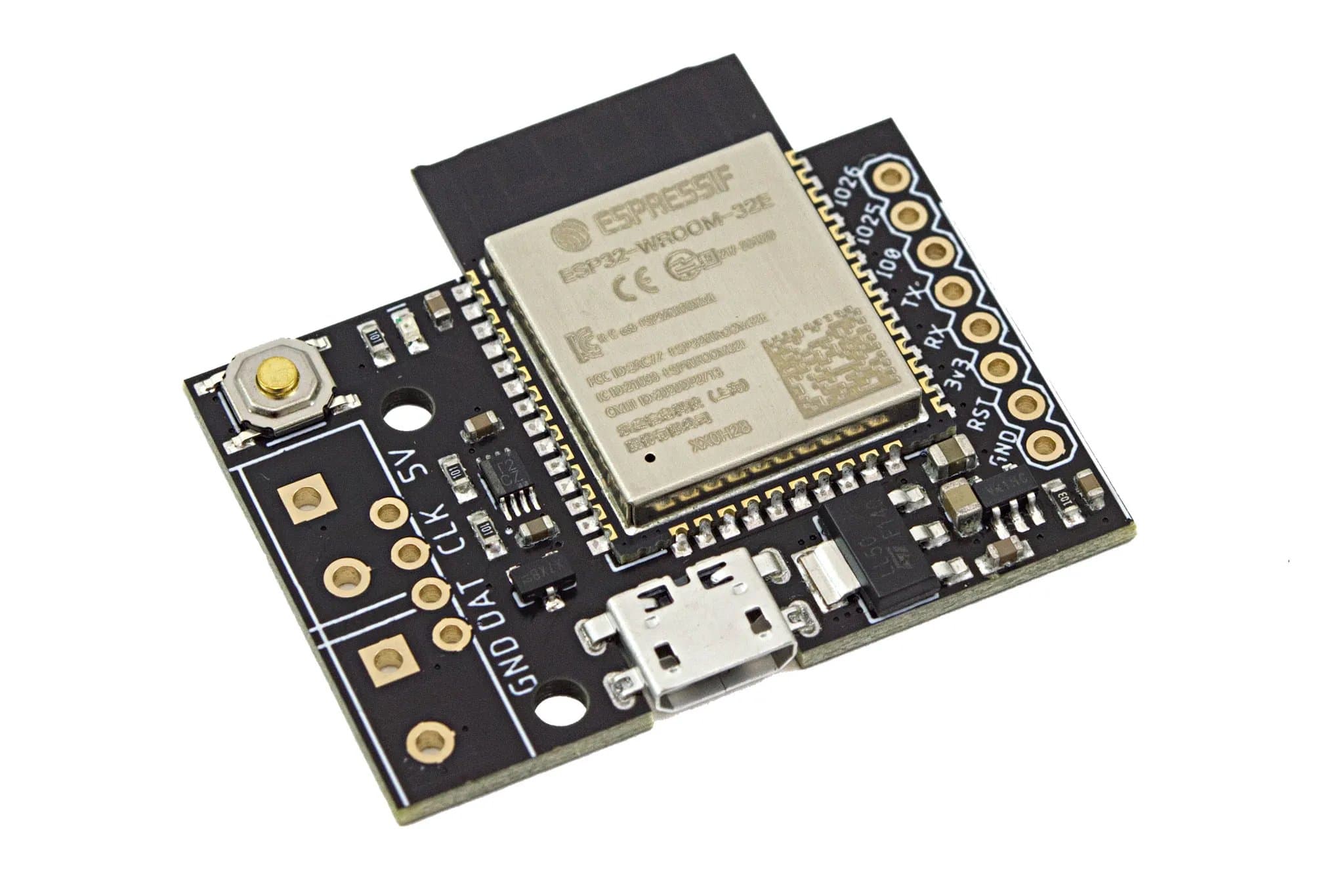
Table Of Content
Source: Make Magazine
Category: Hobby
Originally Published: 2025-11-06
Curated: 2025-11-09 07:32
This article appeared in Make: Vol. 95. Subscribe to Make: for more great articles.
Pairing addressable LEDs with a programmable LED controller simplifies hardware and animations. Many controllers run on the ESP32, using Wi-Fi to host browser-based software that customizes patterns and organizes playlists, no coding required. Anyone can flash open-source control software like WLED to an off-the-shelf board, but a prefab controller provides power management and built-in sensor integration to optimize space and simplify wiring. From plug-and-play to completely customizable, the right LED controller will perk up any project!
Pixelblaze V3 Standard
Photo above
Expandable Innovation: Pixelblaze V3 Standard’s proprietary browser-accessible software makes it easy to assemble a pattern playlist. Its unique JavaScript pattern editor creates and modifies animations while instantly propagating changes to the display. A 3D pixel map feature keeps animations looking consistent on any possible LED configuration. Multiple Pixelblaze controllers can synchronize over Wi-Fi to easily scale up a project’s size. LED strips attach via screw terminals. Pixelblaze supports many LED types, beyond just WS2812 and APA102, from 5V–18V with reverse polarity protection.
The smaller, Pixelblaze Pico form factor includes a 6-axis IMU and works well in wearables. A sensor expansion board, available separately, adds motion, sound and light reactivity to the Pixelblaze V3.
Adafruit Sparkle Motion
Comprehensive Control: Adafruit’s Sparkle Motion runs WLED with sound-reactive patterns enabled by its I²S microphone. Its Stemma QT I²C port and exposed GPIO pins make it easy to attach external sensors, and a built-in IR receiver responds to remote control. Jumper-selected power input accepts 5, 12, or 20V into the board, protected by a 5A fuse. Three dedicated LED strip outputs attach via screw terminals with an additional GPIO data pin adding a fourth strip, enabling large-scale projects.
The Sparkle Motion’s smaller form factors, the Stick and Mini, trade power for portability, opening the door to create a wide range of NeoPixel projects.
QuinLED DigUno
Powerful Protection: QuinLED’s DigUno optimizes power management for WLED projects. The 2oz copper board handles up to 15A continuous current with a 10A built-in fuse to prevent overload and automatically adjusts for 5V–24V input without jumpers. Dual data outputs can control two WS2812 strips or one APA102 via screw terminals. Power is automatically cut off to LEDs when patterns aren’t displayed to make battery power last longer. Other QuinLED WLED boards are available for both large and small projects.
Adafruit Feather RP2040 Scorpio and Pimoroni Plasma RP2040
Programmable Prototyping: RP2040 boards can be programmed in C++ and CiruitPython using Adafruit’s open-source LED and animation libraries. The RP2040’s PIO processors offload the work of bit-banging data signals, pushing patterns quickly to long LED strings.
Adafruit’s Feather Scorpio RP2040 has eight level-shifted data pins capable of controlling an octet of NeoPixel strips, which require a separate power supply. Pimoroni’s Plasma RP2040 can run 3A at 5V through its USB connector to two level-shifted data pins. Both boards are great for quick prototyping of simpler projects.
This article appeared in Make: Volume 95. Get your copy today for our full 2026 Guide to Boards!
This article was curated from Make Magazine. All rights belong to the original publisher.