
This Chinese company could become the country’s first to land a reusable rocket
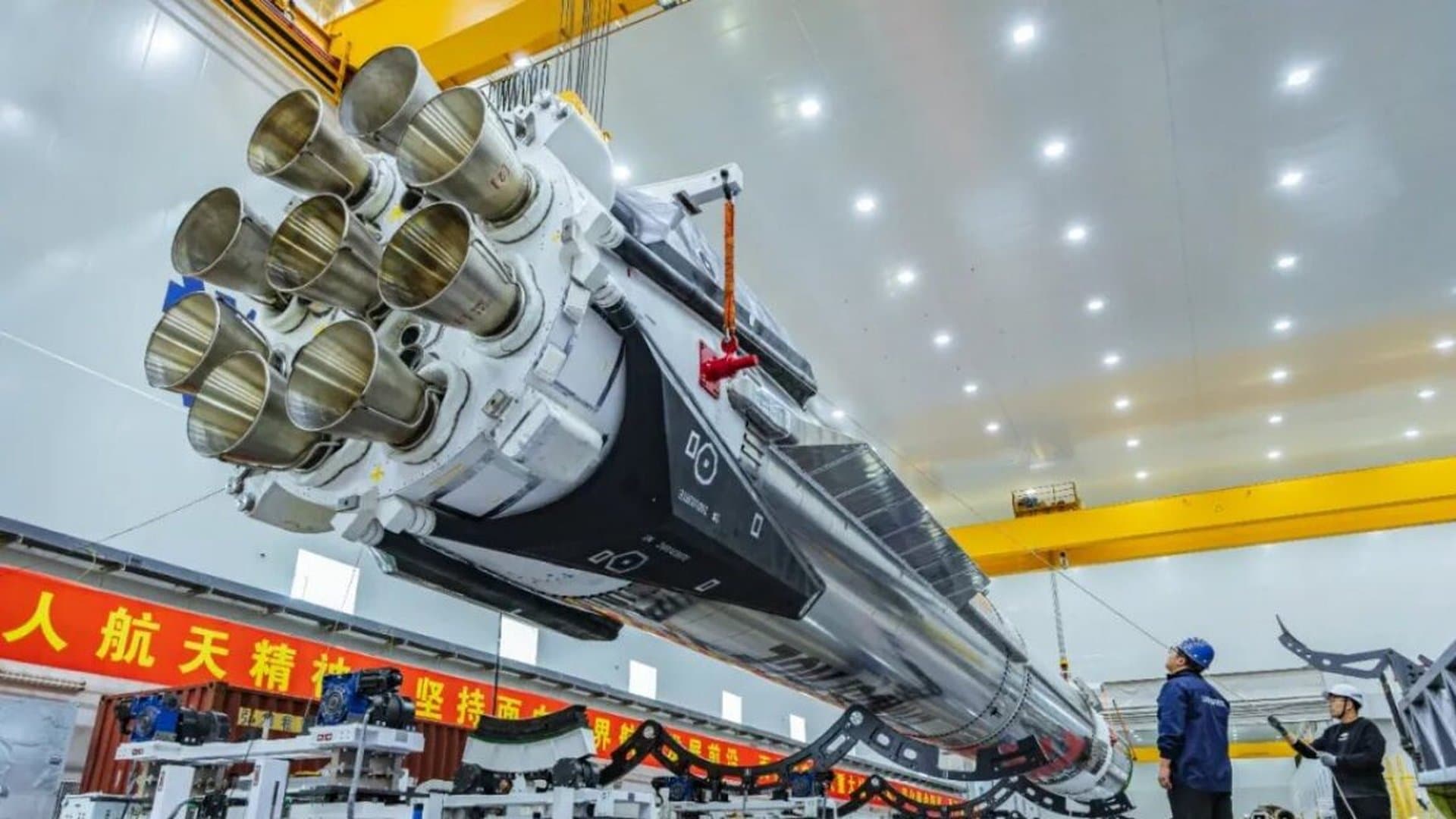
Table Of Content
Source: Ars Technica
Category: Tech
Originally Published: 2025-12-02
Curated: 2025-12-03 16:26
There’s a race in China among several companies vying to become the next to launch and land an orbital-class rocket, and the starting gun could go off as soon as tonight.
LandSpace, one of several maturing Chinese rocket startups, is about to launch the first flight of its medium-lift Zhuque-3 rocket. Liftoff could happen around 11 pm EST tonight (04:00 UTC Wednesday), or noon local time at the Jiuquan Satellite Launch Center in northwestern China.
Airspace warning notices advising pilots to steer clear of the rocket’s flight path suggest LandSpace has a launch window of about two hours. When it lifts off, the Zhuque-3 (Vermillion Bird-3) rocket will become the largest commercial launch vehicle ever flown in China. What’s more, LandSpace will become the first Chinese launch provider to attempt a landing of its first stage booster, using the same tried-and-true return method pioneered by SpaceX and, more recently, Blue Origin in the United States.
Construction crews recently finished a landing pad in the remote Gobi Desert, some 240 miles (390 kilometers) southeast of the launch site at Jiuquan. Unlike US spaceports, the Jiuquan launch base is located in China’s interior, with rockets flying over land as they climb into space. When the Zhuque-3 booster finishes its job of sending the rocket toward orbit, it will follow an arcing trajectory toward the recovery zone, firing its engines to slow for landing about eight-and-a-half minutes after liftoff.
Credit: Landspace LandSpace’s reusable rocket test vehicle lifts off from the Jiuquan Satellite Launch Center for a high-altitude test flight on Wednesday, September 11, 2024.
A first step for China
At least, that’s what is supposed to happen. LandSpace officials have not made any public statements about the odds of a successful landing—or, for that matter, a successful launch. It took Blue Origin, a much larger enterprise than LandSpace backed by Amazon founder Jeff Bezos, two tries to land its New Glenn booster on a floating barge after launching from Cape Canaveral, Florida. A decade ago, SpaceX achieved the first of its now more than 500 rocket landings after many more attempts.
LandSpace was established in 2015, soon after the Chinese government introduced space policy reforms, opening the door for private capital to begin funding startups in the satellite and launch industries. So far, the company has raised more than $400 million from venture capital firms and investment funds backed by the Chinese government.
This article was curated from Ars Technica. All rights belong to the original publisher.